


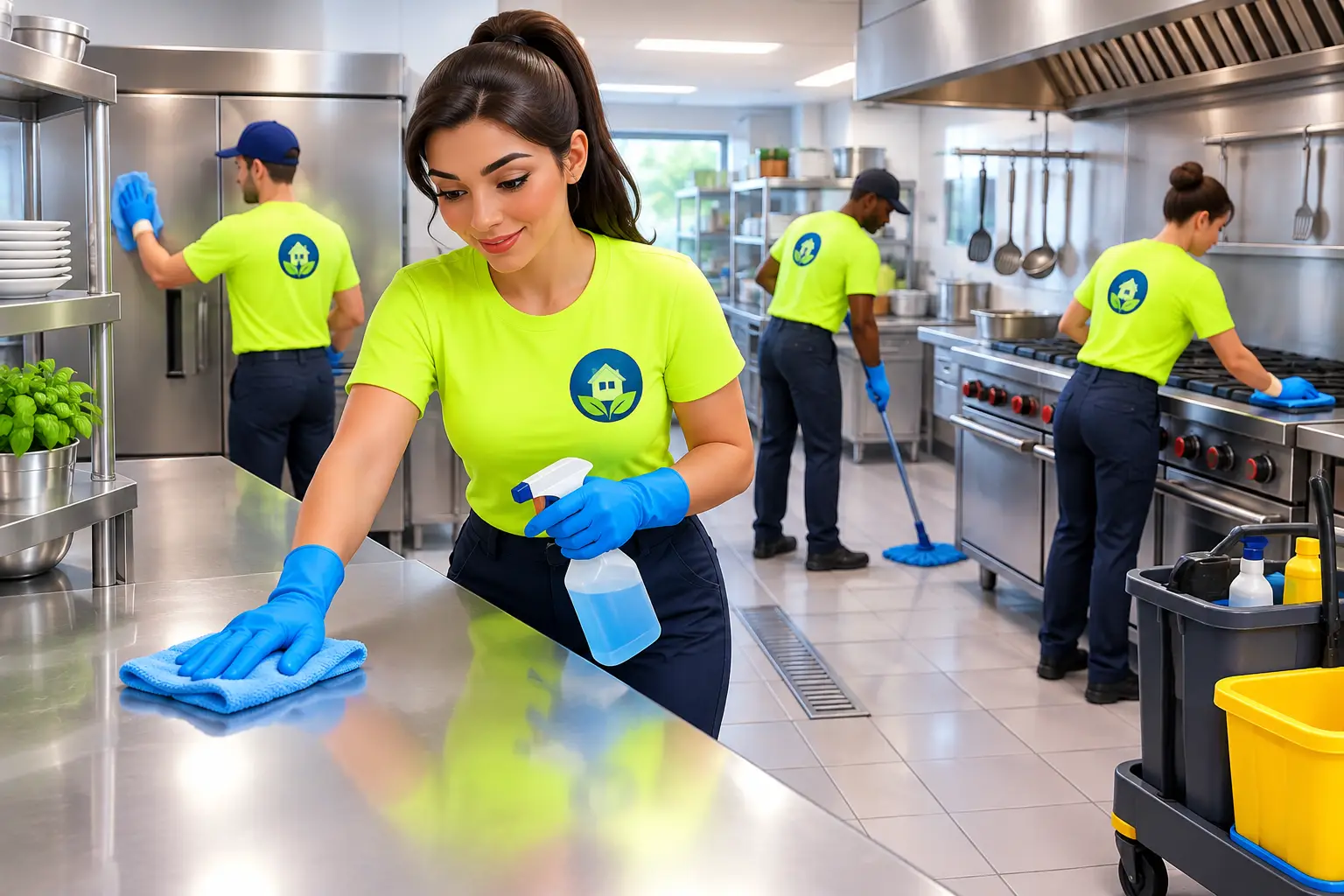
A busy dinner service can leave a kitchen looking very different from the one that opened a few hours earlier. Grease builds around cooktops, crumbs collect beneath equipment, bins fill quickly and floors take a beating. So, who cleans restaurant kitchens? Usually, it is a shared job between the venue’s own team and professional commercial cleaners, with each responsible for different parts of the clean.
Getting that split right matters. Daily cleaning protects food safety and keeps the kitchen workable for the next shift. Periodic professional cleaning tackles the heavy build-up and hard-to-reach areas that busy staff may not have time, equipment or safe access to manage properly.
Who cleans restaurant kitchens day to day?
In most restaurants, cafes, bars and takeaway venues, chefs, kitchen hands and closing staff complete the routine clean at the end of each shift. This is not an optional extra after a long night. It is part of operating a safe, professional kitchen.
The daily routine generally includes washing and sanitising food-preparation surfaces, cleaning utensils and equipment, emptying rubbish, mopping floors, dealing with spills, and cleaning sinks and dishwashing areas. Staff should also wipe down touch points such as cool-room handles, tap handles, switches and storage doors. How detailed that routine needs to be depends on the menu, the volume of trade and the type of equipment in use.
For example, a small coffee shop may need intensive attention around its espresso machine, display cabinet and counter, while a high-volume grill venue will need a far more rigorous routine for fryers, splashbacks, cooktops and grease-prone floors. A kitchen that prepares raw poultry, seafood or allergen-sensitive meals also needs clear procedures to prevent cross-contamination.
Venue owners remain responsible for making sure the work is done properly. That means giving staff enough time to clean, supplying suitable products and equipment, and checking that the closing checklist has not become a rushed tick-box exercise. A spotless pass at the front of house does not make up for a neglected prep area out back.
When professional restaurant kitchen cleaners are needed
Professional cleaners are commonly booked for scheduled deep cleans, often outside trading hours. They work alongside the venue’s daily routine rather than replacing it. A commercial cleaner can focus on the detailed work that takes longer, requires professional-grade equipment or interrupts service if attempted during a normal shift.
This can include deep cleaning floors and grout, scrubbing greasy walls and splashbacks, cleaning behind movable equipment, sanitising storage areas and restoring neglected surfaces. In restaurants with tiled floors, grease and food residue can settle into grout lines and create an unpleasant appearance as well as a slip risk. Regular attention makes a real difference.
A professional cleaning team may also be brought in before an inspection, after a renovation, when taking over a venue, following a particularly busy season, or when the kitchen has fallen behind. There is no benefit in waiting until the build-up is obvious. Once grease has hardened around equipment and grime has worked into floor edges, the job becomes more disruptive and time-consuming.
Affordable Clean Geelong provides tailored commercial cleaning for hospitality venues, using qualified, police-checked and fully insured cleaners who can work around your operating hours. For local operators, that means one less practical task to chase after a demanding service.
Jobs that may need separate specialists
Not every cleaning task should be handed to a general cleaner. Exhaust bonnets, ducting and canopy systems may require a specialist contractor with the right training, access equipment and reporting process. The same applies to some grease traps, pest issues, refrigeration maintenance and major equipment servicing.
It is worth confirming exactly what is included when booking any kitchen clean. Ask whether the quote covers behind and beneath equipment, wall tiles, high ledges, cool rooms, bin areas, floor drains and external service zones. Those areas are often the difference between a quick surface clean and a proper deep clean.
How often should a restaurant kitchen be professionally cleaned?
There is no single timetable that suits every venue. A quiet daytime cafe will have different needs from a restaurant running lunch and dinner seven days a week. Cooking style matters too. Chargrilling, frying and high-volume baking create more grease, crumbs and residue than a low-cook drinks venue.
As a practical guide, daily cleaning should happen after every service or at the end of the trading day. High-use surfaces need cleaning throughout the shift, especially after handling raw food or changing tasks. Deep cleaning is often scheduled weekly, fortnightly or monthly depending on the kitchen’s workload and condition. Areas with heavy grease exposure may need more frequent attention.
A good way to decide is to inspect the areas staff tend to miss when the venue is busy: under benches, around castors, behind fridges, beneath fryers, floor edges, wall corners and the underside of shelves. If those areas are consistently dirty, the current schedule is not enough.
Keep cleaning records as well. A clear roster helps managers confirm what has been completed, identify recurring problems and show that hygiene is being actively managed. It also makes handovers easier when staff change or casual teams cover a shift.
What should a professional kitchen clean include?
The exact scope should suit the venue, but a thorough restaurant kitchen clean commonly covers four key areas:
- Food-preparation and storage zones, including benches, shelves, handles, splashbacks and the outside of appliances.
- Floors, skirting, grout, corners and areas beneath or behind movable equipment.
- Washing-up and waste areas, including sinks, taps, bins and surrounding surfaces.
- High-touch points and staff amenities, such as doors, switches, toilets and change areas where relevant.
The cleaner should use products appropriate for commercial food-service environments and follow the venue’s site requirements. Cleaning and sanitising are related but different jobs: cleaning removes visible soil and grease, while sanitising reduces germs on a clean surface. One does not reliably replace the other.
For kitchen staff, safety comes first. Wet floors should be managed carefully, chemicals stored and used according to directions, and equipment only moved when it can be done safely. A professional team should know when an appliance needs to be isolated, when access is unsafe and when a specialist should take over.
Choosing a restaurant cleaning company
Price matters for hospitality businesses, but the cheapest quote can cost more if cleaners miss key areas, cancel at short notice or use unsuitable methods. Look for a company that understands commercial sites, can work to a realistic schedule and is prepared to tailor the job to your kitchen rather than offering a vague one-size-fits-all service.
Insurance, trained staff and a reliable point of contact are practical safeguards, not marketing extras. You also want cleaners who respect your premises, follow access procedures and leave the kitchen ready for the next team. If your venue trades late, early or seven days a week, flexible scheduling is especially valuable.
Before the first clean, walk the site with the provider if possible. Point out problem areas, explain what equipment can and cannot be moved, and agree on the scope. Photographs and a written checklist can be useful for larger jobs. Clear expectations help avoid the frustrating situation where everyone assumed someone else was cleaning behind the fryer.
A well-run restaurant kitchen is built on consistent habits, not one heroic clean before an inspection. Give staff a workable daily routine, bring in professional help for the deeper work and review the results regularly. Your team can then start each service in a cleaner, safer space that supports the food and hospitality your customers came for.