


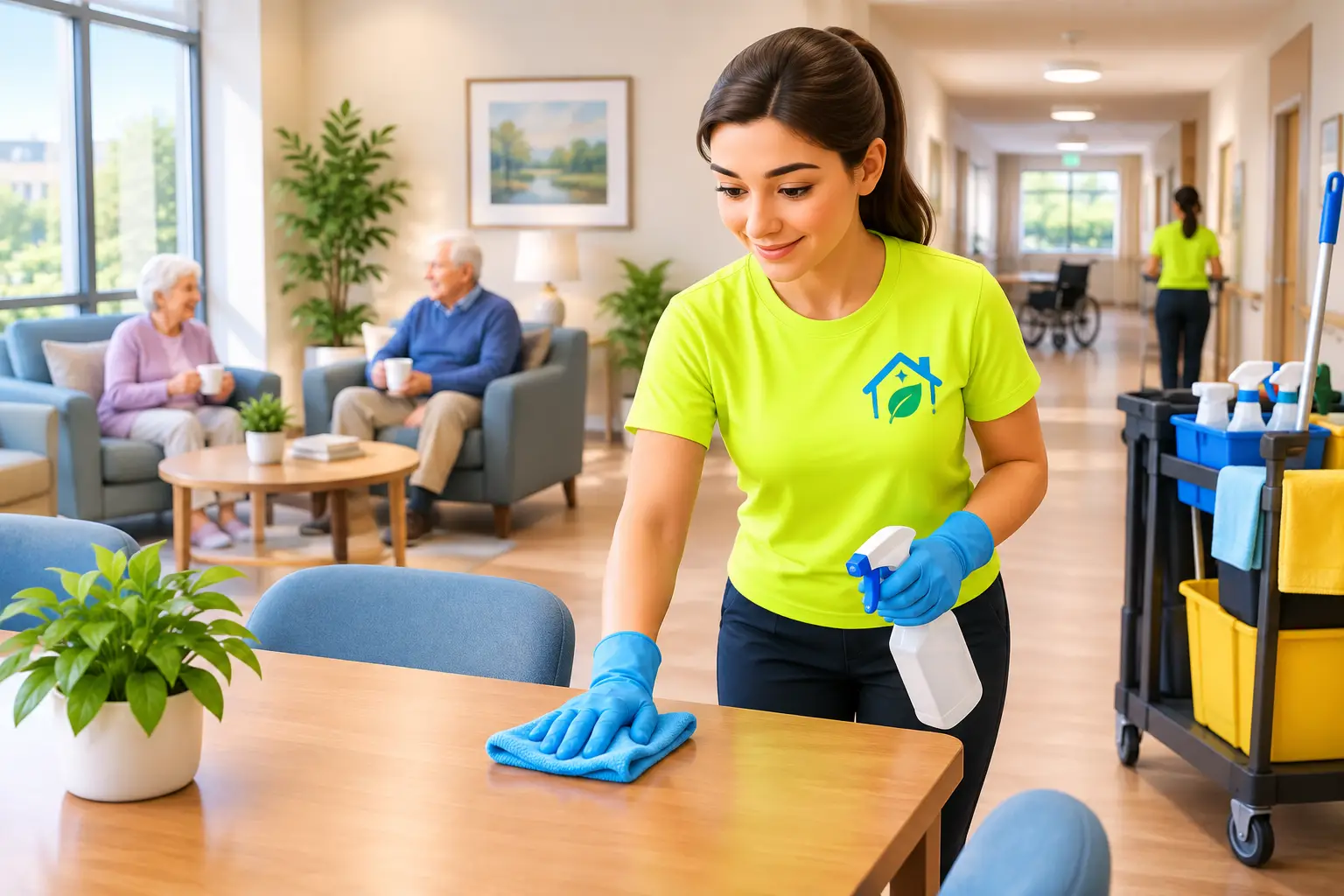
A dining chair arm, a handrail and a call bell may look clean at first glance. In an aged-care setting, though, they are high-touch surfaces used by people who may be more vulnerable to illness. This aged care cleaning guide helps facility managers and care teams set practical cleaning routines that support resident comfort, hygiene and a well-presented home-like environment.
Cleaning in aged care is not simply about making rooms look tidy. It is about reducing avoidable risks, responding properly to spills and maintaining the trust residents and families place in your facility. The best approach combines clear routines, trained people and enough flexibility to deal with the unexpected.
Start with the people and the space
Aged-care facilities are busy, lived-in environments. Residents move between bedrooms, dining rooms, activity areas and bathrooms, while staff, visitors and allied health professionals come and go throughout the day. A routine that works in an empty office after hours will not necessarily suit a residence where people need quiet, privacy and familiar surroundings.
Before setting a schedule, walk through the site and identify how each area is actually used. Shared bathrooms, entrances, lifts, handrails, meal areas and staff break rooms generally need more frequent attention than low-traffic storage spaces. Resident rooms need a respectful approach that works around care plans, rest times and personal belongings.
Speak with care staff as part of this process. They know which bathrooms receive the heaviest use, when corridors are busiest and which residents may be sensitive to noise, fragrance or disruption. This simple step helps avoid a common problem: a cleaning plan that looks good on paper but is difficult to follow in real life.
A practical aged care cleaning guide for daily routines
A reliable daily routine keeps small hygiene issues from turning into larger ones. It should clearly state what is cleaned, how often, who is responsible and how the work is checked. A checklist is useful, but it must support good cleaning rather than become a box-ticking exercise.
High-touch surfaces deserve particular focus. Door handles, railings, light switches, lift buttons, taps, toilet flush buttons, shared tables, chair arms and call points should be cleaned and disinfected according to your facility’s procedures and product directions. Cleaning first removes visible soil. Disinfecting works best on a surface that has already been properly cleaned, so rushing this step can reduce the result.
Bathrooms need close attention throughout the day. Toilets, basins, shower fittings, grab rails, dispensers and floors should be checked for soil, odour, moisture and slip hazards. A clean bathroom is also a safety measure. Water on tiles, loose mats or poorly managed cords can quickly create a fall risk.
In dining and common areas, clean tables and chairs between uses where needed, remove rubbish promptly and attend to spills straight away. Floors should be kept free from crumbs, liquid and obstacles, particularly around meal service and activity times. It is also worth looking beyond the floor: window ledges, remote controls, shared phones and mobility equipment can be frequently touched and easily missed.
Resident rooms require dignity and care
A resident’s room is their personal space, not just another room on a schedule. Knock before entering, introduce yourself and explain what you are there to do. Ask whether there is a suitable time to clean if the resident is resting, receiving a visitor or having care delivered.
Keep personal items where they belong unless permission has been given to move them. Family photographs, mobility aids, reading materials and treasured belongings should be handled carefully. If a cleaner notices damage, a spill, a pest concern, an unusual odour or a possible maintenance issue, it should be reported through the facility’s process rather than quietly worked around.
Use the right products, tools and methods
More chemical is not better cleaning. Products should be suitable for the surface, used at the correct dilution and left on for the required contact time where disinfection is required. Always follow the product label, safety data information and your facility’s infection prevention procedures.
Strong-smelling products can be unpleasant for residents, especially in small rooms or poorly ventilated areas. Where possible, choose products that are effective, appropriate for the setting and used with adequate ventilation. Never mix chemicals, even if the combination seems familiar. Mixing products can create harmful fumes or damage surfaces.
Colour-coded cloths and mops help prevent cross-contamination when staff understand and follow the system. For example, equipment used in toilets should never be used in dining areas or resident bedrooms. Reusable tools need to be cleaned, dried and stored correctly between uses. Dirty mop heads and cloths do not deliver a hygienic result, no matter how good the product is.
Floors also need a method matched to the material. Vinyl, sealed timber, tiles, carpet and entrance matting all respond differently to moisture and cleaning agents. Over-wetting carpet can leave odours or slow drying times, while harsh chemicals can dull some hard floor finishes. Periodic carpet steam cleaning, tile and grout cleaning or upholstery cleaning may be needed alongside the daily program, particularly in busy shared spaces.
Plan for spills, outbreaks and unexpected jobs
Some cleaning jobs cannot wait for the next scheduled round. Body-fluid spills, vomit, blood, continence-related accidents and other contamination need prompt, trained handling using suitable personal protective equipment and the facility’s documented process. Staff should know who to notify, how to isolate the area and where to find the correct spill equipment.
During a suspected or confirmed infectious illness outbreak, routine cleaning usually needs to be increased and targeted. Follow the directions of your infection prevention lead and relevant Victorian health guidance. The right response depends on the illness, the areas affected and the people involved. A one-size-fits-all approach can miss key surfaces or unnecessarily disrupt residents.
Good communication matters as much as speed. Place clear signs around wet floors, restrict access where necessary and let care staff know when a room or bathroom is ready to use again. Cleaning teams should also report low stock before supplies run out, rather than discovering an empty dispenser halfway through a shift.
Train for consistency, not just compliance
A dependable aged-care cleaning program relies on people who understand why each task matters. New cleaners need site-specific induction, including resident privacy, safe manual handling, chemical use, hand hygiene, incident reporting and emergency procedures. In sensitive settings, facilities should also use appropriately screened, insured and trained cleaning staff.
Training should continue after induction. Short refreshers are valuable when procedures change, new products are introduced or audits identify repeated gaps. Supervisors can check cleaning quality through visual inspections, completed records, resident feedback and targeted spot checks of high-touch areas.
There is a balance to strike. Constant checks can make cleaners feel watched rather than supported, while no checks allow standards to drift. The best systems are clear, fair and practical: cleaners know what good looks like, have the time and equipment to achieve it, and can raise issues without blame.
Make cleaning visible in the right way
Residents and families often judge a facility by what they can see and smell. Clean entry areas, fresh bathrooms, clear walkways and tidy dining spaces give reassurance. But visible cleanliness should not lead teams to overlook hidden priorities such as disinfecting touchpoints, cleaning under furniture or maintaining equipment.
A simple daily communication routine can help. Care staff can flag rooms needing attention, cleaners can report repairs or supply issues, and managers can adjust workloads when events, visitor numbers or weather create extra mess. Wet days, for instance, may mean more mud at entrances and a greater risk of slippery floors.
For Geelong aged-care facilities, a local cleaning team can be particularly helpful when schedules need to be flexible around resident routines, family visits or a one-off specialist clean. Affordable Clean Geelong works with trained, police-checked and fully insured cleaners to support facilities that need reliable, practical service without adding unnecessary complexity.
A well-run cleaning program should fade into the background for residents. They should simply feel safe walking to lunch, comfortable in their room and confident that the people caring for their home pay attention to the details. Keep listening to residents and staff, review what is working, and treat every clean surface as part of a safer day.