

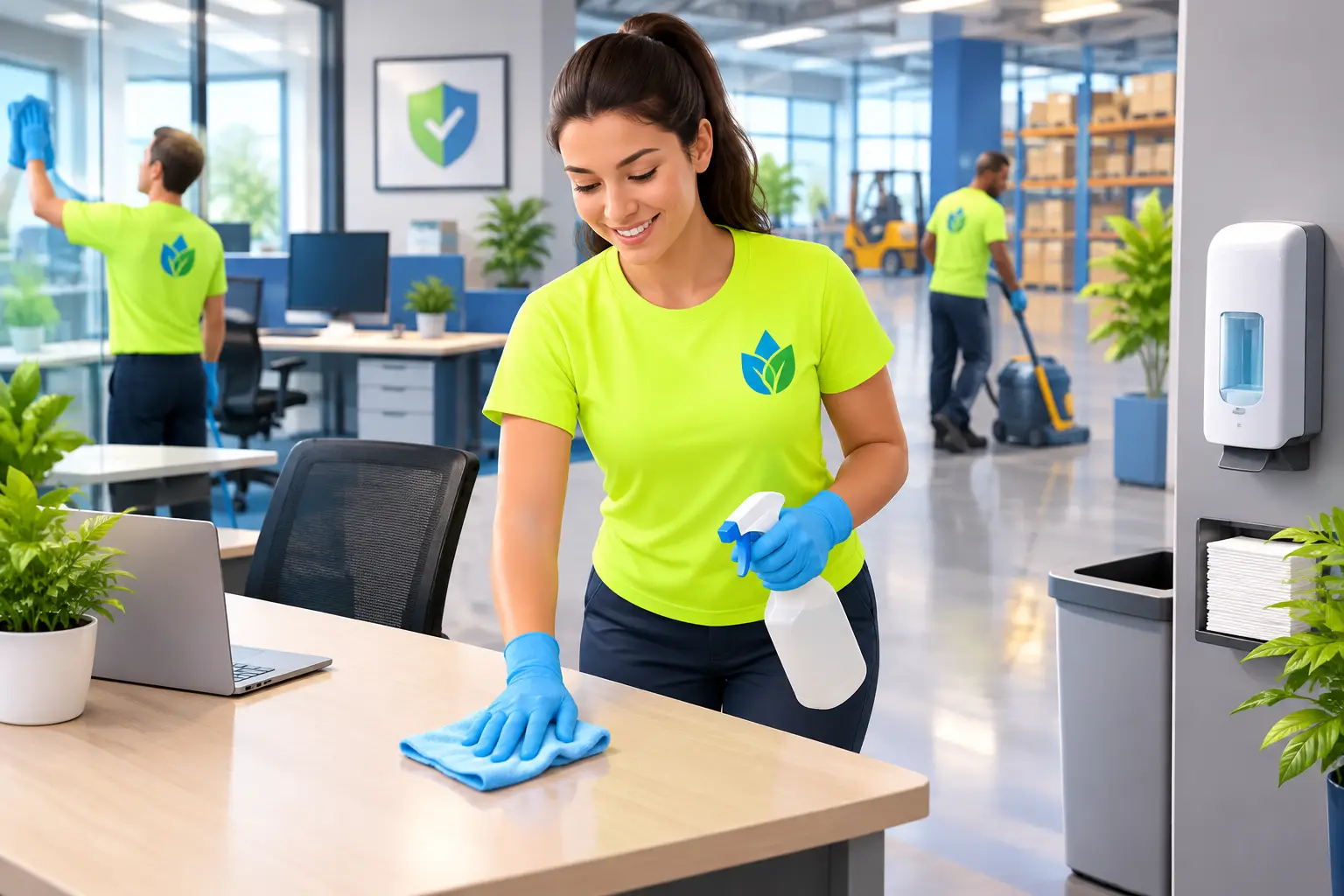
A clean reception desk is reassuring. A clean toilet, break room, kitchen bench and frequently touched door handle are where workplace hygiene compliance is really tested. For Geelong businesses and facilities, the aim is not simply to make the premises look presentable. It is to maintain a workplace that is safer for staff, customers, students, residents and visitors, day after day.
The practical challenge is consistency. A busy office can become untidy between morning and afternoon. A café bathroom may need attention several times in one service. A gym has constant contact points, while a childcare or aged-care setting has a higher duty of care around infection control. The right approach depends on your site, but every workplace needs clear routines, accountable people and cleaning that reaches the details.
What workplace hygiene compliance means in practice
Workplace hygiene compliance means meeting the cleaning, sanitation and safety expectations that apply to your type of premises. It includes legal obligations where relevant, but it also covers the everyday controls that prevent hygiene standards from slipping when the site gets busy.
For an office, this may centre on clean amenities, hygienic kitchens, rubbish removal and reducing germs on shared surfaces. For hospitality venues, food preparation and service areas require more specific procedures. Schools, childcare facilities and aged-care environments need careful attention to high-contact areas, bathroom hygiene and the safe use and storage of cleaning products.
There is no one cleaning checklist that suits every business. Industry requirements, the size of the premises, visitor numbers, operating hours and the people using the space all matter. A small professional office may need a reliable evening clean and staff-led desk hygiene. A fitness centre may need regular daytime checks as well as a thorough scheduled clean.
Start with the areas people actually touch
The most useful hygiene plan begins with a walk through the property at its busiest time. Look beyond the obvious floors and bins. Notice what customers, staff and visitors touch, spill on, share or use without thinking.
Common high-priority points include entry handles, lift buttons, EFTPOS terminals, shared desks, keyboards, tea-room tables, taps, toilet flush buttons, handrails and light switches. In venues with change rooms or showers, benches, lockers and wet floor areas need particular care. In a food business, cleaning requirements for preparation surfaces, equipment and storage areas will be more detailed again.
High-touch surfaces should be cleaned at a frequency that reflects their use. That does not always mean using stronger chemicals or treating every surface the same way. It means selecting suitable products, following product directions and allowing the required contact time when disinfecting is needed. Cleaning removes dirt and residue. Disinfecting is a separate step and is appropriate in situations where infection-control procedures call for it.
Overusing disinfectant can waste product, damage some surfaces and create a false sense of security. Regular handwashing facilities, stocked soap dispensers, paper towel or hand-drying options, and good daily cleaning practices still do much of the heavy lifting.
Build a routine staff can follow
A hygiene plan only works when it is simple enough to use during a normal shift. Give each task a clear frequency and an owner, whether that is an employee, supervisor or contracted cleaner. Avoid vague directions such as “clean when required”. They leave too much room for different interpretations.
A practical schedule often separates tasks into four groups:
- Opening checks, such as inspecting amenities, emptying overflowing rubbish and preparing customer areas.
- During-service checks for spills, toilet supplies, touchpoints and wet floors.
- Daily cleaning of shared areas, floors, kitchens, bathrooms and waste points.
- Weekly or periodic detail work, such as deep cleaning tiles and grout, steam cleaning carpets, upholstery cleaning or cleaning behind equipment.
Keep the schedule where it can be used, rather than stored in a folder nobody opens. A simple sign-off sheet can help managers see that checks occurred and spot repeat issues, such as an amenity that runs out of supplies every afternoon or a kitchen bin that needs an extra collection.
Records are not just paperwork. They show that the business has a process, help hand over responsibilities between shifts and make it easier to respond if a customer, staff member or regulator raises a concern. For higher-risk settings, your sector may require more specific documentation, so check the rules that apply to your service.
Keep cleaning products safe and effective
The products under the sink matter as much as the schedule on the wall. Staff need access to products that are suitable for the task, correctly labelled and stored away from food, children and unauthorised users. Never decant chemicals into unlabelled bottles, and do not mix products unless the manufacturer specifically says it is safe.
Correct dilution is a frequent weak point. Too little product may not do the job. Too much can leave residue, affect indoor air quality, damage finishes or create unnecessary risk for the person cleaning. Staff should know how to use the product safely, what personal protective equipment is needed and where to find safety information.
Colour-coded cloths and mops can also reduce cross-contamination when they are used consistently. For example, equipment used in toilets should never move into kitchen or desk areas. Just as importantly, reusable cloths and mop heads need to be laundered or replaced properly. A dirty cleaning tool simply moves contamination from one surface to another.
Do not let floors and amenities become the weak link
Amenities are often the first place visitors judge a business, and they can become unhygienic quickly. Toilets need more than a quick wipe-down. They need stocked consumables, cleaned touchpoints, attended basins, fresh-smelling bins and floors that are both clean and safe to walk on.
Floor care is also part of compliance, particularly where spills, rainwater, food debris or gym moisture can create slip risks. Put a process in place for responding to spills promptly, displaying warning signs where needed and checking entrances during wet weather. Deep cleaning can be scheduled around your operating hours so it does not interrupt customers or staff.
Carpets, fabric chairs and upholstered booths are sometimes overlooked because they do not look dirty straight away. Yet they hold dust, odours and tracked-in soil over time. Periodic professional carpet steam cleaning and upholstery cleaning can support a cleaner environment while protecting the appearance and lifespan of furnishings.
Make hygiene part of everyday workplace behaviour
A professional cleaner can take care of scheduled cleaning, but staff habits still matter between visits. Team members should know how to report spills, restock supplies, dispose of rubbish correctly and keep shared kitchens usable. Managers set the standard when they respond quickly instead of assuming someone else will deal with it later.
Clear expectations are especially useful for hot desks, meeting rooms and shared equipment. A simple clean-as-you-go approach makes the next person’s day easier and keeps the cleaning team focused on the detailed work that needs trained attention.
It also helps to appoint one person to review the plan regularly. They do not need to inspect every square metre every day. Their job is to notice whether tasks are being completed, whether traffic patterns have changed and whether the current cleaning frequency still makes sense.
When a professional cleaning program makes sense
Many small businesses start by sharing cleaning duties among staff. This can work in a low-traffic space with a stable team and a straightforward routine. The trade-off is that cleaning can be rushed during busy periods, standards can vary between people and no one may have time for deep-detail work.
A recurring professional cleaning program gives facility managers and business owners a more dependable baseline. It can be tailored around early starts, late finishes, trading hours and the areas that need the most attention. This is particularly valuable for offices, schools, childcare centres, aged-care settings, restaurants, cafés, bars and fitness facilities where hygiene affects both safety and reputation.
Affordable Clean Geelong provides flexible commercial cleaning programs with police-checked, fully insured and experienced cleaners, professional equipment and a practical focus on the areas your site depends on. The right service should feel straightforward: agreed tasks, reliable attendance and a clear way to raise changes or concerns.
Review after changes, not only after problems
A hygiene routine should change when the workplace changes. More staff, a renovated kitchen, new equipment, seasonal weather, extended trading hours or a run of winter illnesses can all affect what the premises needs. Review cleaning schedules after these changes rather than waiting for odours, complaints or a failed inspection to force the issue.
The best standard is one your team and visitors barely have to think about. Soap is there, bins are managed, amenities are fresh, floors are safe and shared spaces are ready for the next person. That quiet reliability protects your people and lets your workplace make the right impression every day.